

Blastocyst: Five-day embryo
6.10.2022 · 1 min reading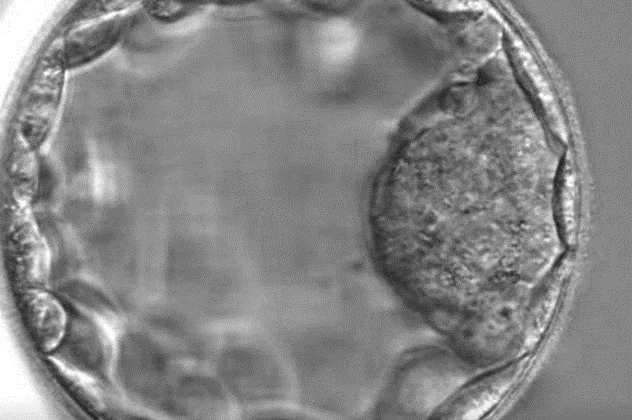
Most embryo transfers in IVF treatment are performed on the fifth day, when the embryo is in the blastocyst stage. But what is a blastocyst exactly and why is this stage so important?
A blastocyst is an early stage of embryo development that occurs on the fifth day after fertilisation. Blastocyst cells are divided into an inner layer – the embryoblast, from which the foetus is later formed, and an outer layer, the trophoblast, which forms the placenta.
At this stage, the embryo is usually transferred to the uterus, while the quality of the blastocyst determines whether it will be suitable for transfer or not.
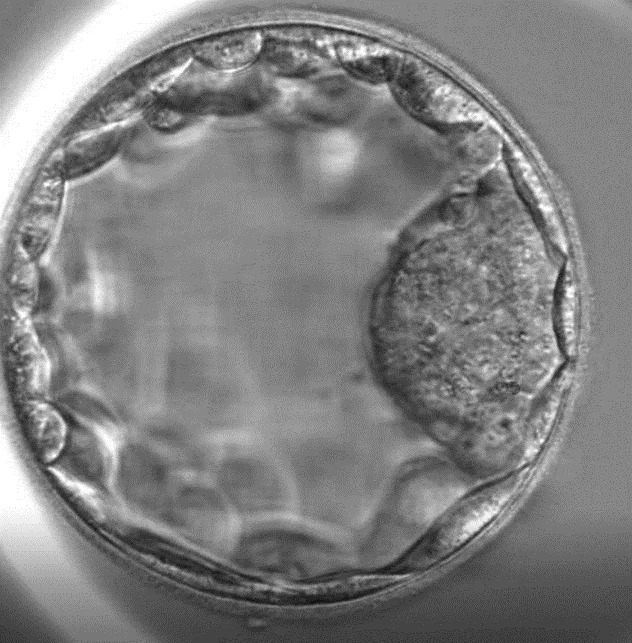
High-quality blastocyst with a regularly formed embryoblast and trophoblast
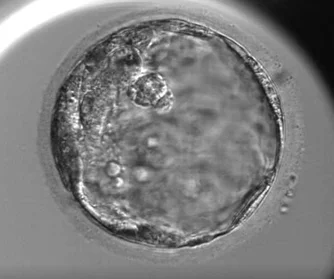
Discarded blastocyst with unsuitable development (absence of embryoblast and low-quality trophoblast with a small number of cells)
Blastocyst transfer
An embryo transfer is a short and painless procedure performed without anaesthesia in an operating room; the doctor introduces the embryo into the patient’s uterus with ultrasound imaging using a catheter.
Generally only one embryo is transferred, but if the patient wishes, two embryos can be transferred; in this case, however, it is necessary to take into account the possibility of a multiple pregnancy.
The transferred embryo is subsequently implanted in the uterine lining, i.e. the endometrium. Nidation (implantation of the embryo) may occasionally result in mild bleeding or spotting, but this does not mean that the process has failed.
Blastocyst cryopreservation
High-quality blastocysts that are not transferred in a given cycle can be frozen and stored in liquid nitrogen for the future. Embryos can be stored this way for an essentially unlimited period of time and used in further treatment.
Blastocyst cryopreservation enables repeating the transfer if the first embryo doesn’t implant. This increases the chance of a successful pregnancy without having to repeat the whole IVF cycle again.